When Business Speaks, Software Listens: The Hexaware-Replit Partnership and the Rise of Zero-Code Enterprise Agile
For decades, the process of creating enterprise software has been a complex translation exercise. Business leaders articulate a vision, product managers document requirements, and engineers translate those specifications into functional code. Each step introduces the risk of something getting lost in translation, leading to costly rework and delays. A recent announcement, however, signals a fundamental shift in this paradigm, moving us closer to a future where business intent can be directly converted into production-ready applications.
On February 17, 2026, global IT services provider Hexaware Technologies announced that its agentic AI software engineering platform, RapidX®, would feature native integration with Replit, an AI platform that turns natural-language descriptions into software . This partnership aims to create a seamless path from rapid prototyping to secure, scalable enterprise systems, empowering a new class of builders and redefining the nature of software development itself.
From Vibe Coding to Business Vibing
The core of the collaboration lies in connecting Replit's intuitive, natural-language interface with Hexaware's robust engineering and governance framework. Replit, which has seen explosive growth to over 500,000 business users, allows anyone to generate functional applications simply by describing what they want . This practice, often called "vibe coding," has been transformative for startups and individual creators, enabling rapid iteration and idea validation.
However, the free-flowing nature of vibe coding often clashes with the stringent demands of the enterprise. Large organizations require security, scalability, and adherence to complex architectural standards. This is where the Hexaware partnership becomes significant. By integrating RapidX®, the collaboration introduces the engineering discipline necessary for enterprise-grade software. It transforms "vibe coding" into what could be called "business vibing"—a process where the accessibility of natural language is fused with the governance and security required for corporate environments.
As Sanjay Salunkhe, President at Hexaware, noted, the goal is to help clients "shorten delivery cycles, reduce rework through early validation, and improve predictability across large-scale programs".
The Dawn of Zero-Code Enterprise Agile
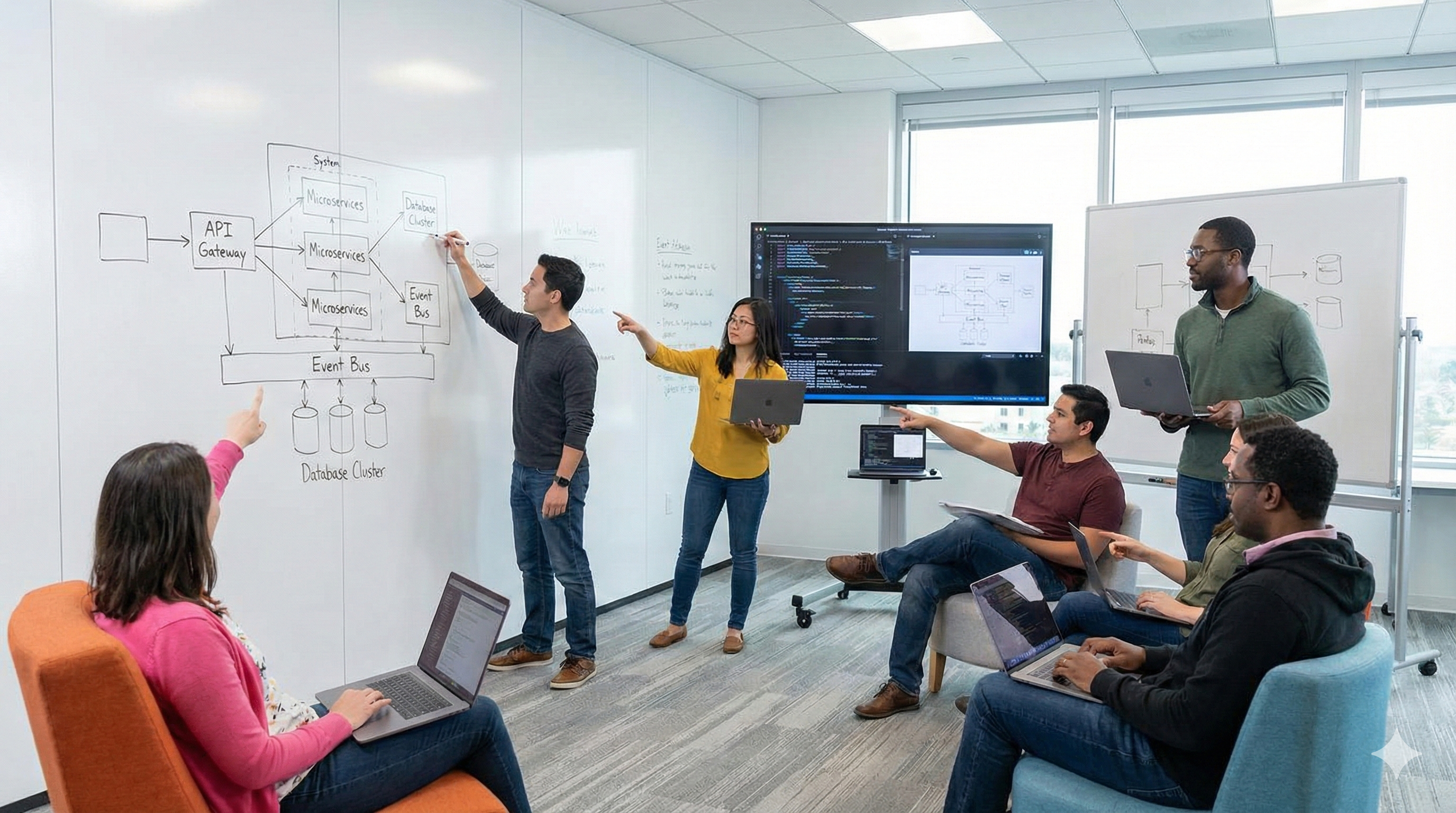
This integration is a powerful indicator of a broader trend: the rise of "Zero-Code Enterprise Agile." It suggests a future where the role of the software developer evolves significantly. Instead of focusing primarily on writing syntax, the developer becomes an architect, a validator of AI-generated logic, and an interpreter of user intent. Their expertise is redirected from the how of coding to the what and why of the business problem.
This shift empowers non-technical domain experts—the people closest to the business challenges—to participate directly in the creation of the tools they need. An analyst in finance could prototype a new reporting dashboard, or a marketing manager could build a custom workflow application, all without writing a single line of code. According to one industry analysis, this approach makes the prototype a "specification more precise than any requirements document could ever be, as it's a working reference implementation that customers have already endorsed" .
To facilitate this transition, Hexaware has established a dedicated Center of Excellence (CoE) in Chennai, India, focused on embedding AI into the software development lifecycle and training engineering teams in these new agentic development practices.
A New Era for Software Creation
The partnership between Hexaware and Replit is more than just a technology integration; it's a strategic response to the evolving demands of the digital economy. It acknowledges that the bottleneck in innovation is often not the technology itself, but the communication gap between business vision and technical execution.
By empowering business users to build and empowering developers to architect and govern, this collaboration paves the way for a more agile, responsive, and efficient model of enterprise software development. It begs the question: as AI takes on more of the syntactical heavy lifting, what new heights of strategic value will human developers be free to achieve?