AI in Project Management: Beyond the Hype at CES 2026
The world of project management is undergoing a seismic shift, and the epicenter of this transformation is Artificial Intelligence. For years, the promise of AI has been a tantalizing mix of hype and reality, with many tools offering little more than glorified automation. However, the landscape is maturing, and the recent CES 2026 in Las Vegas made one thing clear: AI is no longer just a buzzword; it's becoming an indispensable partner in the workplace.
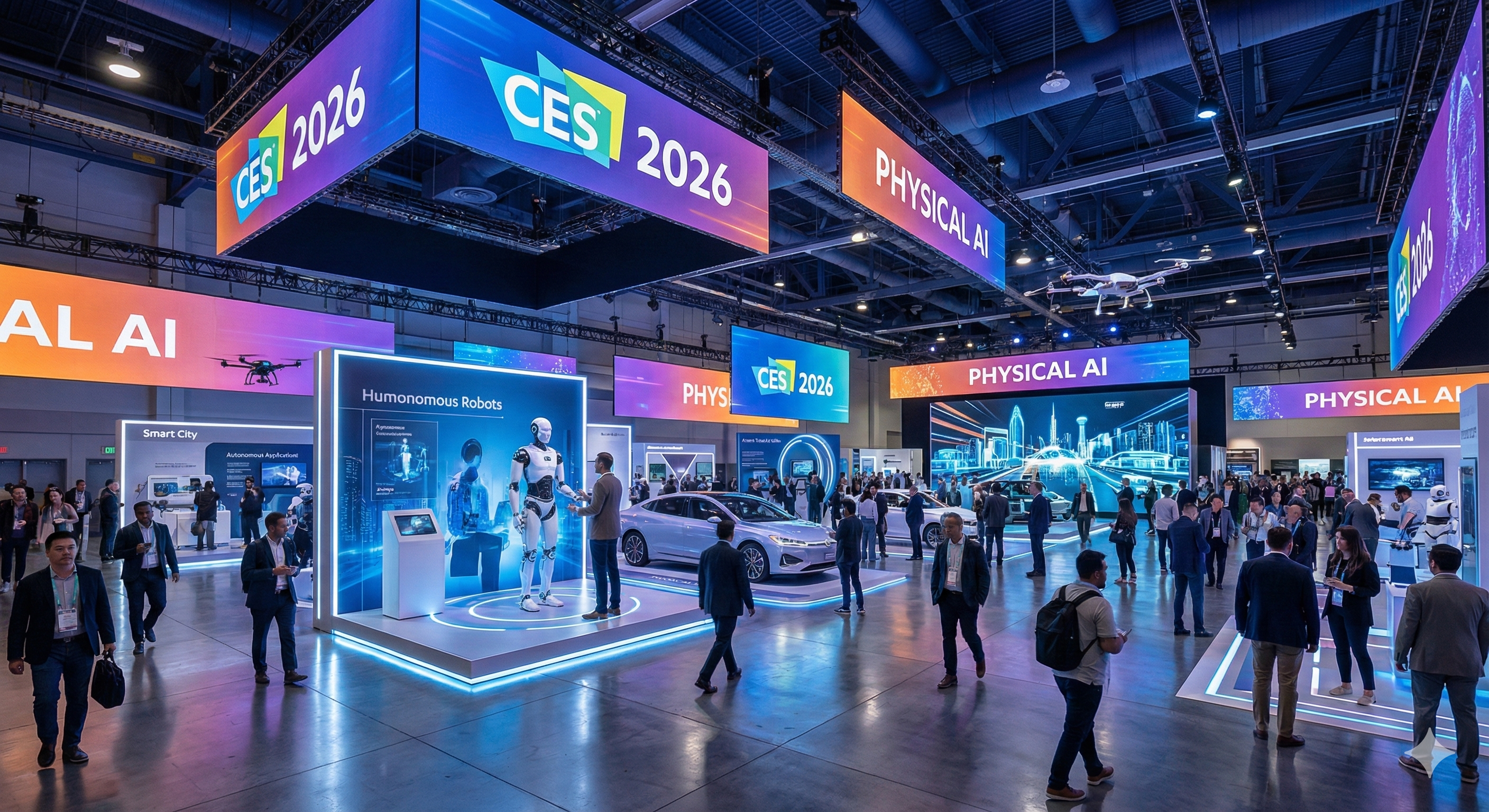
This year's CES, the largest post-pandemic tech event with over 148,000 attendees, was dominated by the theme of "Physical AI" [1]. This concept, championed by industry leaders like Nvidia's CEO Jensen Huang, signifies a move away from AI as a purely digital tool and towards its integration into the physical world through robotics, smart devices, and embedded systems. This shift has profound implications for project management, as AI begins to orchestrate not just data, but also workflows, schedules, and even physical tasks.
From "AI Washing" to Real-World Value
The project management software industry has been rife with "AI washing," where basic automation features are marketed as revolutionary AI. However, as the industry matures, a clear distinction is emerging between genuine AI capabilities and mere marketing fluff. A recent article on Dev.to highlights that true AI in project management should learn from a team's work patterns, predict realistic timelines, identify risks, and adapt to unique workflows [2].
Tools like Monday.com's Workload Prediction, ClickUp Brain, and Asana's Smart Goals are already demonstrating the tangible benefits of this approach. They are moving beyond simple task automation to provide predictive insights, intelligent assistance, and a clear connection between daily tasks and strategic objectives. This trend is further validated by an upcoming global study from the Project Management Institute (PMI), which surveyed 870 professionals across 97 countries to understand how AI is being used to enhance planning accuracy, delivery speed, and risk management [3].
CES 2026: A Glimpse into the Future of Work
CES 2026 provided a compelling preview of how AI will reshape the workplace. The focus was not just on what AI can do, but how it will be integrated into our daily routines. Here are some of the key trends and innovations that will impact project managers:
The Rise of Agentic and Cross-Device AI
The concept of "agentic AI" – AI that can take autonomous actions rather than just providing suggestions – was a major theme. This is a significant step up from the current generation of AI assistants. As noted in a Forbes article, the winners in this new era will be those who redesign their workflows around AI, not just deploy copilots [4].
Lenovo's new Qira platform, a highlight of CES, exemplifies this trend. Described as a "personal AI platform," Qira is a hybrid AI assistant that works seamlessly across smartphones, PCs, and tablets [5]. This cross-device continuity is crucial for project managers who are constantly switching between different devices and contexts. Qira's ability to leverage both on-device processing and cloud-based models promises a powerful and personalized experience, making it a strong contender against Apple Intelligence.
Revolutionizing Meeting Intelligence
Meetings are a cornerstone of project management, and AI is poised to make them more efficient and productive. While AI-powered meeting summarizers have been around for a while, their accuracy has been a persistent issue. However, new innovations are addressing this challenge.
The Vocci Ring, a note-taking wearable showcased at CES, is a prime example. This discreet device can record conversations from up to five meters away for eight hours, offering a more reliable way to capture meeting minutes and action items [6]. This, combined with advances in on-device transcription and multilingual captioning, as seen in Lenovo's new SMB Vertical AI Solution, will significantly reduce the administrative burden on project managers.
The Embedded AI Layer
Perhaps the most significant trend from CES 2026 is the idea of AI as an "always-on layer" embedded into our devices and environments. This is a departure from the traditional view of AI as a standalone tool. In the future, AI will be an integral part of our operating systems, our applications, and even our physical spaces.
This embedded AI will orchestrate workflows, manage schedules, and provide proactive assistance without requiring constant user input. The implications for project management are immense. Imagine an AI that can automatically adjust project timelines based on real-time progress, reallocate resources to avoid bottlenecks, and even flag potential risks before they become critical issues. This is the future that CES 2026 has promised, and it's a future that will empower project managers to focus on what they do best: leading their teams and delivering successful projects.
The Road Ahead
The journey towards fully AI-powered project management is still in its early stages, but the path forward is becoming clearer. The focus is shifting from hype to reality, from standalone tools to embedded intelligence, and from simple automation to autonomous action. As we look ahead, the insights from CES 2026 and the ongoing research from organizations like PMI will be invaluable in navigating this exciting new landscape.
The future of project management is not about replacing human project managers with AI, but about augmenting their skills and capabilities. It's about creating a symbiotic relationship where AI handles the data-driven, administrative tasks, and humans focus on the strategic, creative, and interpersonal aspects of project leadership. The innovations showcased at CES 2026 are a testament to this vision, and they offer a tantalizing glimpse into a future where projects are delivered faster, more efficiently, and with greater success.
References
[1] CES. (2026, January 9). CES 2026: The Future is Here. https://www.ces.tech/press-releases/ces-2026-the-future-is-here
[2] Sean, B. (2026, January 7). AI Project Management: What Helps vs What’s Hype in 2026 Now. DEV Community. https://dev.to/siva_velu_b39044a1dd3b732/ai-project-management-what-helps-vs-whats-hype-in-2026-now-26k0
[3] Project Management Institute. (2026). Insights from the Latest Global Study on the AI-Powered Project Management. https://www.projectmanagement.com/webinars/1147633/insights-from-the-latest-global-study-on-the-ai-powered-project-management
[4] Marr, B. (2026, January 7). Why CES 2026 Signals The End Of 'AI As A Tool'. Forbes. https://www.forbes.com/sites/bernardmarr/2026/01/07/why-ces-2026-signals-the-end-of-ai-as-a-tool/
[5] Moore, M. (2026, January 7). Lenovo unveils the AI tools it hopes will supercharge your productivity at work. TechRadar. https://www.techradar.com/pro/lenovo-unveils-the-ai-tools-it-hopes-will-supercharge-your-productivity-at-work
[6] Mehta, I. (2026, January 8). Vocci throws its hat into the note-taking ring battle. TechCrunch. https://techcrunch.com/storyline/ces-2026-follow-live-for-the-best-weirdest-most-interesting-tech-as-physical-ai-and-robots-dominates-the-event/page/4/